Foil Stamping vs. Embossing: Which Is Better for Your Notebook?
Foil Stamping vs. Embossing: Which Is Better for Your Notebook?
When customizing a notebook, the cover is often the first thing customers notice.
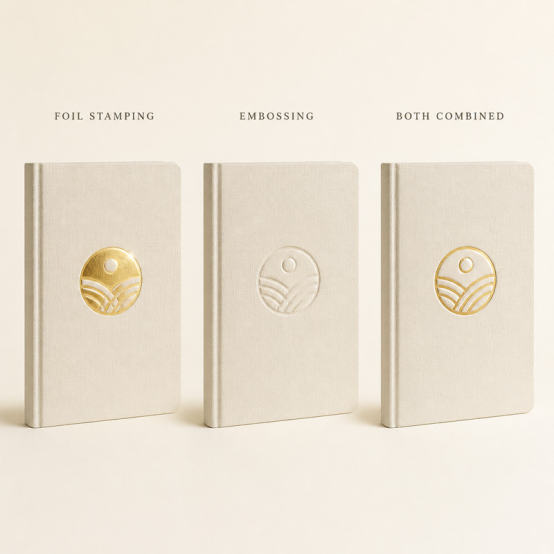
A simple logo can look completely different depending on the finishing technique used. Two of the most popular options are foil stamping and embossing.
Both can create a premium look, but they achieve very different visual and tactile effects.
So, which one is better for your custom notebook?
The answer depends on your brand style, budget, cover material, and the impression you want to create.
1. What Is Foil Stamping?
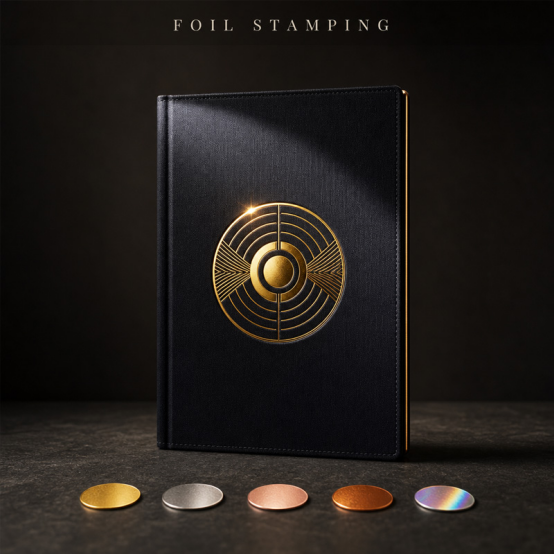
Foil stamping uses heat and pressure to transfer a thin layer of foil onto the notebook cover.
Common foil colors include:
· Gold
· Silver
· Rose gold
· Copper
· Holographic
· Custom colors
Foil stamping is especially effective for logos, names, titles, and simple graphic elements.
Why Do Brands Choose Foil Stamping?
The biggest advantage is visual impact.
A gold logo on a dark notebook cover, for example, can immediately create a luxurious and sophisticated appearance.
Foil stamping works particularly well for:
· Premium notebooks
· Corporate gifts
· Luxury stationery
· Wedding or event notebooks
· High-end gift sets
If your goal is to make the logo stand out at first glance, foil stamping is a strong option.
2. What Is Embossing?
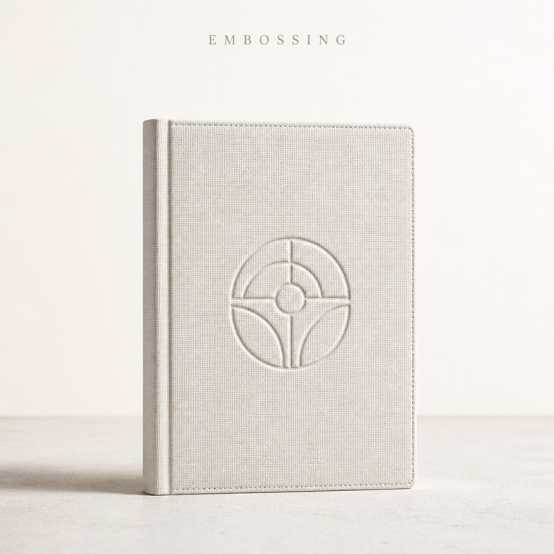
Embossing creates a raised design on the notebook cover by pressing the material between specially made dies.
Unlike foil stamping, embossing doesn't necessarily require color.
The effect comes mainly from shape, depth, light, and shadow.
A simple embossed logo can look subtle and elegant while also creating a noticeable texture when touched.
Embossing works especially well for:
· Minimalist notebooks
· Premium corporate stationery
· Leather or PU covers
· Hardcover notebooks
· Luxury brands
For brands that prefer a clean and understated aesthetic, embossing can be an excellent choice.
3. Foil Stamping vs. Embossing
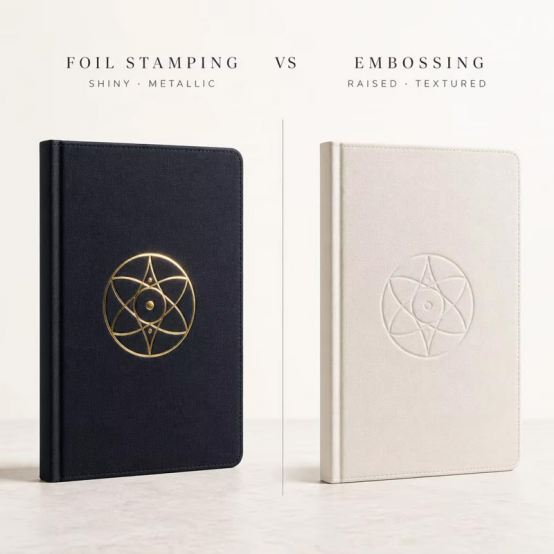
Feature | Foil Stamping | Embossing |
Main effect | Visual | Visual + Tactile |
Appearance | Shiny / Metallic | Raised / Textured |
Brand style | Luxury, eye-catching | Minimalist, sophisticated |
Color options | Many | Usually material-based |
Logo visibility | High | More subtle |
Tactile experience | Limited | Strong |
Best for | Logos, titles, details | Logos, patterns, textures |
Neither technique is automatically better.
They simply create different experiences.
4. Which One Looks More Premium?
This is where things get interesting.
Premium doesn't always mean shiny.
Foil stamping creates an immediate luxury impression because of its metallic effect.
Embossing creates a more understated premium feel through texture and depth.
For example:
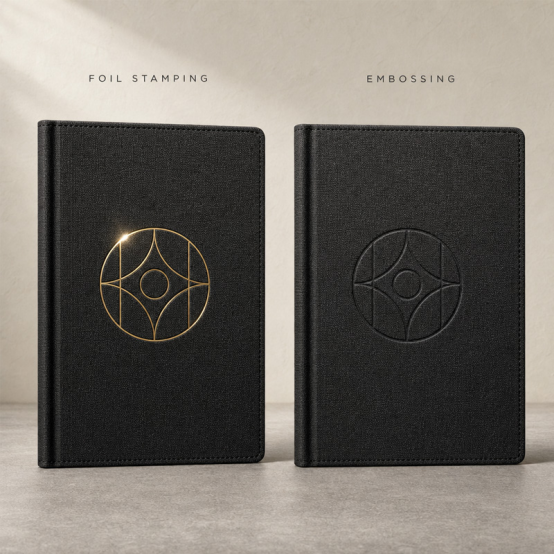
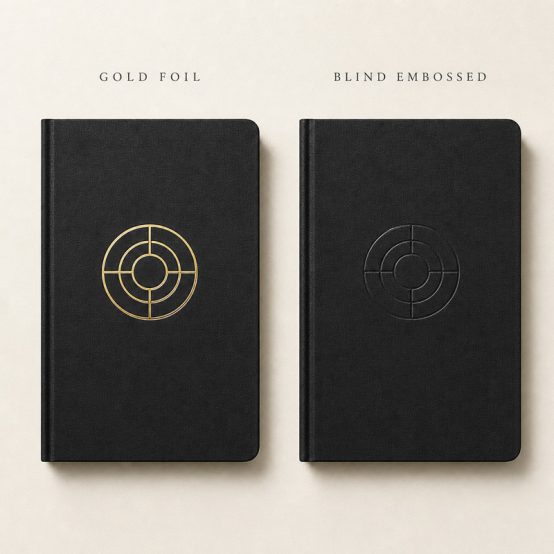
Black Hardcover + Gold Foil Logo
→ Bold, luxurious, eye-catching
Black Hardcover + Blind Embossed Logo
→ Minimalist, elegant, understated
Both can look premium—the right choice depends on your brand identity.
5. What About Combining Both?
You don't always have to choose one.
Foil stamping + embossing can be combined to create a stronger effect.
For example, a logo can be embossed first and then finished with gold foil.
This creates:
Color + Shine + Texture + Depth
However, combining multiple finishing techniques also increases production complexity and cost.
For a simple design, one well-executed finishing technique may actually produce a better result than using too many effects.
6. Consider the Cover Material
Not every finishing method is suitable for every cover.
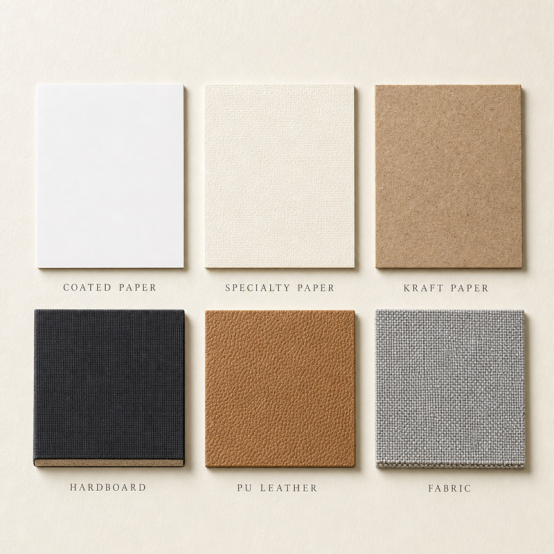
Before making a decision, consider whether your notebook uses:
· Coated paper
· Specialty paper
· Kraft paper
· Hardcover
· PU leather
· Fabric
· Other cover materials
The material's texture, thickness, and surface can affect the final appearance.
This is why it is important to test the actual combination of cover material + finishing technique before mass production.
7. Don't Forget Your Design
The artwork itself also affects the result.
Foil stamping is generally excellent for:
· Simple logos
· Text
· Fine decorative elements
· Metallic branding
Embossing is particularly suitable for:
· Logos
· Symbols
· Patterns
· Simple shapes
· Minimalist designs
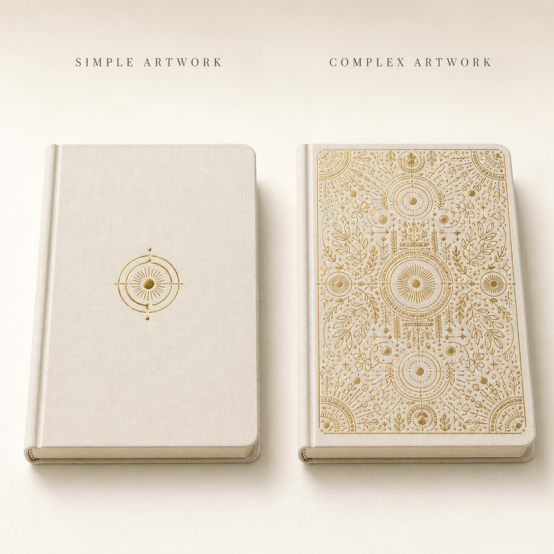
Very complicated artwork may not always produce the cleanest result.
When designing a premium notebook, simple artwork often creates the strongest finishing effect.
8. Which One Should Your Brand Choose?
Choose foil stamping if you want:
High Visibility + Metallic Effect + Luxury Appearance
Choose embossing if you want:
Texture + Minimalism + Subtle Premium Feel
Choose both if your design requires:
Strong Visual Impact + Tactile Experience
But before making the final decision, consider your target customers, cover material, design, order quantity, and budget.
Final Thoughts
Foil stamping and embossing are both powerful ways to upgrade a custom notebook.
But the goal isn't to choose the most expensive finishing technique.
It's to choose the technique that best matches your brand.
Want your logo to shine? → Foil Stamping.
Want your logo to be felt? → Embossing.
Want both? → Combine them.
At the end of the day, a premium notebook isn't created by one finishing process alone.
The right paper, cover, printing, binding, and finishing need to work together.
Because sometimes, one small detail on the cover is enough to make a customer pick up your notebook and take a second look.